
ADVERTORIAL
The Future of Autonomous AI Is Here

A Smart Way to Understand Where AI, Global Security, and Infrastructure Are Converging
Artificial intelligence has already transformed how data is processed and decisions are made at scale. Companies like Nvidia built the computing backbone that powers modern AI, while platforms such as Palantir demonstrated how large datasets can be translated into actionable intelligence for governments and enterprises. More recently, ventures like xAI have highlighted how quickly AI capabilities are advancing at the model level.
These companies represent the first phase of AI adoption—focused on compute, software, and analytics. A second phase is now emerging, one that brings AI out of centralized systems and into real-world environments, where decisions must be made locally, securely, and in real time.
This shift is reshaping how nations and industries approach global security, infrastructure protection, and operational resilience.
Why AI Is Becoming Central to Global Security and Infrastructure
Modern global security challenges extend well beyond traditional defense concepts. Governments and institutions are increasingly focused on protecting critical infrastructure, transportation networks, borders, urban environments, and essential services.
Across both public-sector security and commercial infrastructure, there is growing demand for systems that can:
Detect and interpret complex environments in real time
Fuse data from multiple sensors and signals
Operate autonomously at the edge, without constant cloud dependence
This evolution is driving the adoption of AI systems that are embedded directly into physical infrastructure and mobility platforms, supporting both national security objectives and civilian applications.
The Company at the Center: VisionWave Holdings
One company developing technology specifically for this dual-use future is VisionWave Holdings, Inc. (VWAV).
VisionWave focuses on AI-powered sensing, RF imaging, and autonomous systems designed for deployment in complex, real-world settings. Its platforms are built to meet the rigorous requirements of security-focused organizations, while remaining adaptable for commercial and industrial use cases.
The company operates globally and works with partners and evaluators across regions including India, the Middle East, and Israel, aligning its technology roadmap with long-term global security and infrastructure modernization initiatives.
What VisionWave Is Building
VisionWave’s technology stack integrates perception, intelligence, and autonomy into a unified platform.
Core components include:
Evolved Intelligence™ (EI) — an edge-AI engine enabling real-time sensing, analysis, and decision support
Vision-RF™ — patented technology that converts radio-frequency signals into visual data, improving awareness in dense or obstructed environments
AI-enhanced radar systems — supporting high-resolution monitoring for fixed and mobile infrastructure
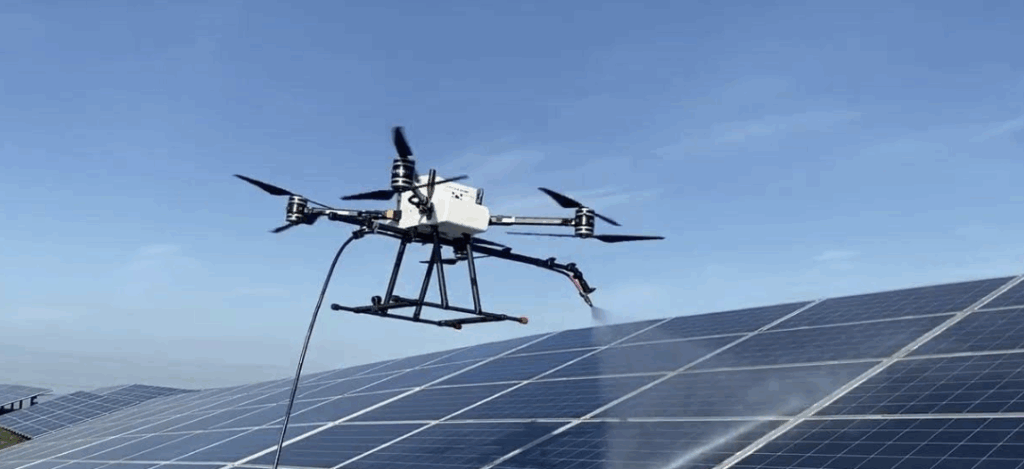
Autonomous platforms — aerial, ground, and maritime systems designed for monitoring, inspection, and coordinated response
These systems support security-oriented missions while also addressing commercial needs where situational awareness and autonomy are critical.
Defense-Linked Technology With Broad Commercial Use
While VisionWave’s platforms are suitable for defense and national security environments, the same capabilities extend naturally into civilian and commercial sectors.
Applications include:
Critical infrastructure protection (ports, airports, energy facilities)
Border and perimeter security
Urban safety and smart-city systems
Industrial inspection and asset monitoring
Disaster response, emergency coordination, and logistics
This dual-use design allows VisionWave to participate in security-driven budgets while also addressing large commercial markets seeking advanced sensing and autonomy.
Why This Layer Is Different
Foundational AI companies like Nvidia, Palantir, and xAI focus on compute, software platforms, and models. Real-world security and infrastructure environments introduce additional requirements:
Operation in disconnected or signal-dense environments
Tight integration between software, sensors, and hardware
Real-time decision cycles with high reliability standards
VisionWave operates in this specialized layer, where AI becomes part of a self-contained operational system, rather than a cloud-only service.
Global Engagement and Ongoing Evaluations
VisionWave is actively validating its technology through international engagements related to security, infrastructure protection, and autonomous systems. These efforts span government-led initiatives and commercial-adjacent programs, reinforcing the company’s positioning at the intersection of AI, global security, and infrastructure modernization.
Closing Perspective
The first wave of AI was defined by software and data centers.
The next wave is being defined by real-world systems that support global security, resilient infrastructure, and autonomous operations.
VisionWave Holdings represents one example of how AI is expanding beyond traditional applications into practical, security-focused, and commercial environments—a shift that continues to shape the next phase of intelligent systems.
This report is for general informational purposes only and is not a solicitation, recommendation, or offer to buy or sell any security. Bulls and Brands is not a registered investment advisor or broker-dealer. All information, opinions, and analysis are based on sources believed to be reliable; however, no warranty is made regarding accuracy or completeness. Opinions are subject to change without notice.
Bulls and Brands assumes no responsibility for any actions taken based on the material presented. Bulls and Brands, its officers, or affiliates may buy or sell securities referenced in this publication at any time and are under no obligation to update such activity.
Some statements contained in this report may include forward-looking information, which involves estimates, expectations, and assumptions about future events. These statements involve uncertainties that may cause actual outcomes to differ from those described.
This material is intended for educational and informational purposes only and should not be used as the sole basis for any financial decision. Individuals should verify information independently and consult a licensed financial professional for guidance.