J
NASDAQ: JFB
NASDAQ: JFB Will Soon Mark a Newly Public AI Defense Stock that Could Gain Rapid Investor Attention
Meet the Small Cap AI Drone Warfare Rocket Ship that Wall Street Hasn’t Fully Priced in Yet!
AI Drone Merger Set to Create $1.5B Nasdaq-Listed Powerhouse!
JFB Construction (NASDAQ: JFB) and Israeli AI robotics firm XTEND are in the process of merging in an all-stock transaction that values the combined company at $1.5 billion!
The merger is expected to close at anytime, after which the new entity will be renamed XTEND AI Robotics and trade on the Nasdaq under the ticker symbol “XTND”.
XTEND Honey Badger tactical drone imagery from XTEND.me
Strategic validation
As the World Ramps Up Defense Spending, JFB is a Must-Watch Ground-Floor Stock Entering the AI-Driven Drone Warfare Space!
WHEN VENTURE CAPITAL, THE PENTAGON, AND WALL STREET ALL AGREE — IT’S TIME TO PAY CLOSE ATTENTION!
Xtend is Backed by High-Profile Strategic Defense Investors Including Eric Trump, Unusual Machines (NYSE: UMAC), Protego Ventures, Aliya Capital, and American Ventures!
With technology already used by the U.S. Department of Defense, partnerships with Lockheed Martin’s Skunk Works, and over $100 million in backing from defense-focused venture capital, this emerging company has earned validation from both the Pentagon and sophisticated private investors.
When smart money aligns early, it is worth paying attention!
XTEND Wolverine platform imagery from XTEND.me
Rare opportunity
JFB is One of the Most Important Small-Cap Defense AI Stocks You’ve Never Heard of — Until Now!
REVENUE IS ALREADY SURGING +115% YOY — AND THE AUTONOMOUS WARFARE BOOM IS ONLY GETTING STARTED!
A RARE OPPORTUNITY
This quietly trading NASDAQ company is starting to stand out in the defense space and could be described as a SpaceX meets Palantir model — but applied directly to the battlefield!
SpaceX and Palantir continue to dominate headlines as two of the most important names in modern tech infrastructure — one redefining how we access space, the other redefining how governments and enterprises make sense of complex data.
Where does Xtend come into play here?
Xtend blends real-world deployed autonomous systems with a powerful software layer sitting on top of them. On the “SpaceX side,” Xtend is building and deploying AI-driven robotic systems — primarily drones and autonomous platforms — designed for real operational environments where conditions are unpredictable, contested, and often electronic-warfare heavy. These aren’t demo systems or concept prototypes; they’re being used in active defense contexts where performance, speed, and reliability matter immediately.
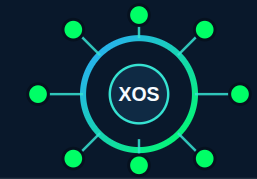
On the “Palantir side,” the differentiation comes from Xtend’s XOS operating system, which functions as a centralized control and coordination layer for autonomous missions. Instead of operating single drones in isolation, XOS enables a single operator to manage and orchestrate multiple systems at once, with AI assisting in navigation, coordination, and task execution in real time. The result is a shift from traditional drone usage to a networked, software-defined approach to warfare — where the value is increasingly concentrated in the operating system that ties everything together.
This is what makes JFB a different kind of defense stock about to emerge.
Instead of simply building drones, Xtend is focused on the software and autonomy that could become increasingly important as modern defense systems expand and evolve!
Top line catalysts
Xtend TOP LINE CATALYSTS
- REVENUE UP +115% YOY — MOMENTUM IS NOT SLOWING DOWN
- $9.0M new autonomous drone program secured (Middle East expansion)
- AI-powered XOS platform = “iOS of battlefield robotics”
- New patents locked in for drone navigation under GPS + comms jamming
- $500M+ pipeline + DoD Drone Dominance Program participation (200,000 drone initiative)
- REVENUE UP +115% YOY — MOMENTUM IS NOT SLOWING DOWN

Discover How JFB is Positioning Itself at the Center of the Autonomous Warfare Revolution!
Market backdrop
THE AUTONOMOUS WAR ECONOMY
We’re not in the old-school defense cycle anymore where companies win contracts for jets, tanks, or long procurement cycles that take decades to materialize.
The entire structure of warfare is shifting in real time. Modern conflict is being rewritten by drones, autonomy, and AI decision systems operating at machine speed.
What used to be hardware-heavy is now becoming software-defined. What used to require hundreds of soldiers is now being compressed into a handful of operators managing autonomous systems. And what used to be controlled chaos on the battlefield is now becoming algorithmic coordination between drones, sensors, and AI-driven mission software.
This is the backdrop JFB is entering.
It’s not just a defense contractor — it’s positioning itself as a software layer for autonomous warfare, where human operators supervise fleets of machines instead of directly piloting individual systems.
As global defense budgets accelerate and geopolitical tension keeps rising, the demand for scalable autonomous systems is exploding.
Governments don’t just want drones anymore — they want systems that can think, coordinate, adapt, and survive electronic warfare conditions. That’s the shift.
And JFB has built directly into that shift as it merges with Xtend.
XTEND Scorpio platform imagery from XTEND.me
“The demand for systems that keep operators out of harm’s way is surging as the global security environment grows more volatile, and this represents one of the largest market opportunities in defense technology today
— Aviv Shapira, Chief Executive Officer and Co-Founder of Xtend
Why JFB stands out
WHY JFB STANDS OUT
THIS IS NOT JUST A DRONE COMPANY — IT’S SOON GOING TO BE A WARFARE OPERATING SYSTEM PLAY!
The biggest misconception with JFB is trying to classify it as “just another drone company.”
That framing completely misses the point. The real product here is not hardware — it’s Xtend’s XOS operating system, which functions as a centralized brain for autonomous multi-domain robotics.
XOS is designed to allow a single operator to manage multiple autonomous systems across air, land, and potentially maritime environments simultaneously.
Instead of controlling one drone at a time, operators are effectively orchestrating entire mission clusters, where AI handles sub-tasks, navigation assistance, and real-time decision support.
This is where the strategic value starts to compound. Xtend is not selling isolated platforms — it’s building a unified control layer that can sit across different robotic systems and mission types.
That kind of architecture is what transforms a company from a hardware vendor into an infrastructure-level defense player.
The real unlock is how XOS handles chaos environments. These systems are designed for GPS-denied zones, electronic warfare interference, communication delays, and high-pressure operational conditions. In other words, Xtend is not building for lab environments — it’s building for real battlefield conditions where most systems break down.
This is less like a drone company and more like a defense software infrastructure platform wrapped in robotics execution capability!
XTEND Scorpio 500 imagery from XTEND.me
XOS software layer
XOS: THE SOFTWARE THAT CHANGES EVERYTHING
At the heart of Xtend is its crown jewel: XOS — the Xtend Defense Operating System
XOS is not just drone software. It is a software-defined combat platform that fuses human decision-making with AI autonomy.
Much like iOS and Android reshaped the smartphone industry, XOS is redefining how robotic warfare systems are controlled, scaled, and deployed.
Key capabilities include:
- Simultaneous control of multi-platform, multi-mission drone fleets
- AI-driven autonomous sub-tasks, with operators retaining high-level command
- Immersive VR-based user experience, enabling near zero training time
- Platform-agnostic, open architecture
- Third-party app store, SDKs, and API integrations
- Real-time swarm and teaming capabilities
The result? One operator. Multiple drones. Multiple missions. Real-time battlefield dominance.
DESIGNED FOR SPEED, INTUITION, AND CHAOS
Xtend’s systems are engineered for swift operational readiness. Operators with no prior flight experience can deploy indoor and outdoor tactical drones rapidly, even in complex, dynamic environments.
Features like Mark & Fly, exchangeable payloads, and third-party software integration allow Xtend platforms to adapt instantly to mission needs — ISR, close-quarters operations, urban combat, reconnaissance, and more.
This is warfare at machine speed, with human judgment intact.
Tactical platforms
A FULL ARSENAL OF TACTICAL PLATFORMS
Xtend offers a growing portfolio of specialized platforms, all unified under one single operating system:
- XTENDER – Micro indoor tactical ISR drone for GPS-denied environments
- SCORPIO 500 & 1000 – Multi-mission tactical UAS
- HONEY BADGER – Compact, rugged combat drone
- WOLVERINE, ATLAS, PRO, MICRO, A1, ROVER, NEST – A scalable ecosystem for every battlefield scenario
Each platform is designed to plug seamlessly into XOS, creating a networked combat robotics force rather than isolated drones.
XTENDER
SCORPIO 500
HONEY BADGER
WOLVERINE
Defense integration
LOCKHEED MARTIN PARTNERSHIP
One of the most important public milestones in Xtend’s history came with its collaboration with Lockheed Martin Skunk Works®.
In December 2025, Lockheed Martin and Xtend demonstrated the integration of XOS into the Skunk Works MDCX™ autonomy platform, enabling simultaneous command and control of multiple classes of UAS in Joint All-Domain Command and Control (JADC2) scenarios.
multiple channels moving at once
defense alignment
allied adoption
contractor validation
This integration:
- Eliminated multi-operator handoffs
- Reduced manpower requirements
- Improved situational awareness
- Accelerated decision-making timelines
- Enabled marsupial drone missions (large drones deploying smaller drones)
This is not a marketing partnership. This is a company being woven directly into the future architecture of U.S. military command and control.
Pentagon contract
MULTI-MILLION DOLLAR PENTAGON CONTRACT
Xtend has secured a multi-million-dollar fixed-price contract from the U.S. Department of Defense to develop and deliver next-generation AI-enabled one-way attack (OWA) tactical drone systems, a major validation of the company’s technology and its growing importance to modern U.S. warfighting doctrine.
Awarded through the Department’s Special Operations and Low-Intensity Conflict office, the competitive contract recognizes Xtend as a leader in affordable, lethal, and survivable unmanned systems designed specifically for irregular warfare, urban combat, and contested environments.
At the core of the program is Xtend’s AI-enabled ACQME-DK platform, which enables a single operator to remotely deploy and command coordinated swarms of tactical FPV drones capable of executing complex missions without exposing personnel to direct risk. Unlike traditional drone systems that rely on vulnerable communications or single-platform control, Xtend’s architecture is built for electronic-warfare resilience, incorporating dual fiber-optic and RF communications to maintain low-latency control in jammed or GPS-denied environments.
The system’s modular, cost-effective design allows rapid reconfiguration across reconnaissance, training, distraction, and lethal strike roles — directly aligning with Pentagon priorities around affordability, scalability, and lethality per dollar spent.
With domestic production, training, and support anchored in Tampa, Florida, this contract further cements Xtend as a trusted supplier of AI-driven tactical drone systems at a moment when autonomous warfare capabilities are becoming central to U.S. defense strategy.
XTEND drone imagery from XTEND.me
AI drone arms race
THE CENTER OF THE AI DRONE ARMS RACE
The Next Wave of Defense Isn’t Hardware… It’s Software, AI, And Swarms — And JFB Will Soon Be Planted Right in the Center of it.
- AI IS THE NEW OIL.
- DEFENSE IS THE NEW GOLD.
- AND DRONES ARE THE DELIVERY SYSTEM.
Conflicts in Eastern Europe, the Middle East, and beyond have made one thing clear: drones, software, and AI are now central to military doctrine, not optional add-ons!
AI-Assisted Tactical Drones, Exploding Defense Budgets, and a New Global Arms Race Are Converging and this Company Checks IT ALL.
Wall Street is undergoing a quiet but profound shift. Artificial intelligence is no longer just about consumer apps or enterprise software, and defense is no longer viewed as a slow, legacy industry. Modern warfare has entered the drone era, where AI-assisted autonomous systems determine speed, survivability, and battlefield dominance.
As global conflict accelerates and defense spending surges, investors are hunting for companies that combine artificial intelligence, autonomous drones, and real battlefield deployment — and JFB may become one of the few pure-play names that checks ALL THREE BOXES!
War has changed, and this little-known company is building the software that controls the battlefield, presenting a rare ground-floor opportunity in the AI-driven defense era.
Defense budgets
EXPLODING DEFENSE BUDGETS ARE FUELING THE RISE OF AI DRONE WARFARE
Defense Spending Is Accelerating — And AI Drones Are the Tip of the Spear.
The global defense landscape is undergoing a historic transformation. Rising geopolitical conflict, asymmetric warfare, urban combat environments, and electronic warfare threats have permanently altered how wars are fought.
At the same time, AI, autonomy, and unmanned systems are no longer experimental — they are mission-critical.
Under the Trump administration’s renewed push to aggressively expand U.S. defense spending, priorities are shifting toward technologies that deliver force multiplication, operator safety, and decisive battlefield advantage.
Drones, AI-driven autonomy, and software-defined warfare platforms sit at the very top of that list.
This is where JFB steps in.
Xtend is not a concept-stage startup, but a battle-proven, NDAA-compliant, American-made AI tactical drone company already deployed by militaries around the world.
The Company is NOT building toys but building an operating system for modern combat robotics!
With over 10,000 systems deployed across air, land, and sea in more than 32 countries, Xtend’s platforms remove soldiers from harm’s way while delivering zero-learning-time, multi-mission capability.
Momentum building
MOMENTUM IS BUILDING FAST
REVENUE, CONTRACTS, AND REAL DEPLOYMENT ARE ALIGNING
One of the most important signals in the recent updates is the +115% year-over-year revenue growth. That kind of acceleration doesn’t happen in isolation — it reflects increasing adoption, expanding contract size, and broader deployment across defense customers.
What makes this even more important is that revenue growth is being paired with expanding operational wins. The recently announced $9.0 million autonomous multi-drone program in the Middle East is a strong example of how Xtend is moving from pilot deployments into scaled mission systems. These aren’t theoretical contracts — they involve real operational enhancement, multi-drone orchestration, and field-ready autonomy upgrades.
At the same time, Xtend continues to expand its footprint across multiple regions. Earlier European contracts valued at $8.25 million further reinforce that demand is not localized — it is global and expanding across multiple defense organizations simultaneously.
This is where the narrative starts to shift from “early-stage defense tech” to something more structurally significant.
XTEND Honey Badger imagery from XTEND.me
Intellectual property
BUILDING BARRIERS WHERE IT MATTERS
One of the most overlooked aspects of the company’s recent updates is its growing intellectual property portfolio.
The company has now secured new patents covering UAV navigation and control under communication latency and degraded signal conditions — one of the hardest technical problems in modern drone warfare.

This matters because electronic warfare environments are increasingly becoming the norm, not the exception. GPS jamming, signal disruption, and communication delays are now standard features of contested zones. Systems that cannot function under those conditions are effectively limited in real-world military use.
Xtend’s atented systems address exactly this gap, allowing drones to maintain stability, direction, and mission execution even when communication lines are degraded or partially disrupted. That kind of capability is not easy to replicate, and it creates meaningful defensibility around its core platform.
In parallel, this IP strengthens the value of the XOS platform itself. If XOS becomes the standard control layer for autonomous systems operating under these conditions, the company effectively embeds itself deeper into the operational backbone of modern defense architecture.
Contracts to mass adoption
Xtend is currently sitting on a growing pipeline that includes over $500 million in anticipated opportunities, alongside a $70 million+ backlog. But the more important story is not just the number — it’s the direction and nature of demand.
The company has been selected for participation in the U.S. Department of Defense Drone Dominance Program, a massive initiative targeting deployment of over 200,000 drones by 2027.
CONTRACTS TO MASS ADOPTION SIGNALS
multiple channels moving at once
defense alignment
allied adoption
contractor validation
This program represents one of the largest coordinated efforts to scale autonomous drone systems across military operations.
On top of that, the company continues to build traction through:
- Israeli Ministry of Defense procurement programs involving thousands of tactical drones
- U.S. and European defense contracts expanding across multiple mission types
- Integration testing and collaboration with major defense contractors including Lockheed Martin Skunk Works
This combination of U.S. defense alignment, allied military adoption, and private defense contractor validation creates a multi-layered demand structure that is rare for a small-cap company.
It signals something important: the company is not fighting for relevance — it is being pulled into programs that are already scaling.
The real trade
SOFTWARE-DEFINED WARFARE: THE REAL TRADE
The long-term investment thesis behind Xtend is not complicated, but it is powerful. Warfare is becoming software-defined.
The winners in this new cycle will not just be companies that build drones — they will be companies that control how those drones operate, coordinate, and scale across mission environments.
Xtend is building into that exact layer.
Instead of selling individual systems, it is building a unified autonomy stack that sits above multiple robotic platforms. That means as fleets scale, the value of the software layer increases disproportionately. Every additional drone, every additional mission type, and every additional integration increases system dependence on XOS.
This is where the model starts to resemble high-margin infrastructure software rather than traditional defense hardware.
Bottom line
THE BOTTOM LINE
THIS IS EARLY, BUT THE SIGNALS ARE STARTING TO STACK FAST!
JFB Construction (NASDAQ: JFB) is merging with Xtend, combining an early-stage but increasingly recognized platform with a rapidly scaling AI robotics leader — and while JFB is still in its early market recognition phase, the underlying signals are becoming harder to ignore: revenue is accelerating, contracts are expanding, intellectual property is strengthening, and institutional defense integration is already underway.
Ground-floor opportunities are rare once broad market attention arrives… Backed by strategic capital and aligned with the rise of autonomous defense systems, JFB may soon start to attract closer attention in the next generation of military technology!
This is not a speculative concept story anymore — it is an emerging deployment story inside one of the fastest-growing segments of global defense: autonomous AI warfare systems.
This isn’t your grandpa’s defense sector anymore.
We’re not talking tanks and jets — we’re talking:
- AI swarm drones
- autonomous kill chains
- GPS-denied warfare
- software-controlled battlefields
Modern conflict is basically becoming AI vs AI at machine speed — and whoever controls the software layer controls the battlefield. That’s the real shift here.
Defense spending is going vertical globally, but the real money isn’t in hardware anymore… It’s in autonomy + AI + control systems. And that’s exactly where JFB slides in.
Ground-floor opportunities are rare once broad market attention arrives… it’s time to put JFB on radar now!
Digital Disclosure & Important Notices
Publisher & Sponsorship. This content (the “Content”) is published and distributed by Bulls and Brands (“Publisher”), a media and advertising outlet. Publisher is not a registered investment adviser, broker-dealer, or registered research firm.
Sponsorship in Compliance with SEC Rule 17(b). Publisher has been paid up to $300,000 per month starting July 31st 2026 by Finn Com Inc, which was paid by Chartered Services LLC for marketing and advertising services related to the issuer JFB Construction Holdings aka JFB/XTND. The publisher was compensated strictly in cash. Publisher maintains full editorial control over this Content. Sponsor has not authored, reviewed, or approved the Content and assumes no responsibility for its accuracy or completeness.
No Investment Advice or Offer. The Content is for informational and educational purposes only. It does not constitute investment advice, a recommendation to buy or sell securities, or an offer to buy or sell securities in any jurisdiction. This is not an investment research report, and no fiduciary or advisory relationship is formed through your use of this material. Always consult a licensed financial professional before making investment decisions.
Information Sources & No Duty to Update. The Content is based on public sources believed to be reliable, such as SEC filings, company presentations, and press releases. However, the Content is provided “as is” without any warranties, express or implied, including warranties of accuracy, timeliness, or completeness. Neither Publisher nor Sponsor has any obligation to update, revise, or supplement this Content, even if it becomes inaccurate.
Conflicts of Interest & Trading Disclosure. Publisher, its owners, and affiliates, and Sponsor(s), its owners, its affiliates, may buy or sell shares of the featured issuer at any time without notice, before, during, or after publication of the Content. This presents an inherent conflict of interest. Readers should assume that Publisher and its affiliates may be actively trading the securities discussed. Sponsor may provide marketing or investor relations services to the issuer but has no control over Publisher’s editorial or trading decisions.
Forward-Looking Statements. Some statements in the Content are “forward-looking statements” within the meaning of the Private Securities Litigation Reform Act of 1995. These may include terms such as “expects,” “believes,” “intends,” “plans,” “anticipates,” “may,” “will,” or similar language. Forward-looking statements involve known and unknown risks, uncertainties, and other factors that could cause actual results to differ materially. For more information, consult the issuer’s filings at www.sec.gov.
AI-Assisted Content. Portions of this Content were generated with the help of artificial intelligence tools (including the AI agent “James Denairo”) using publicly available data. While AI-generated content is reviewed by human editors, it may include errors or omit important context. Publisher alone is responsible for the final published material. Sponsor does not participate in the AI process and disclaims liability for any inaccuracies.
High-Risk Securities. Investing in small-cap or micro-cap stocks such as JFB/XTND involves high risk and volatility. These securities are often thinly traded and subject to price manipulation. Investors may lose some or all of their investment. Do not invest unless you can afford a total loss.
Limitation of Liability. To the maximum extent permitted by law, Publisher, Sponsor (Finn Com, Inc.), and their respective affiliates, officers, and agents disclaim all liability for any losses, direct or indirect, arising from use of or reliance on the Content.
Governing Law & Jurisdiction. This disclaimer and any disputes arising from it shall be governed by the laws of the State of Delaware, and any legal action must be brought in the state or federal courts of New Castle County, Delaware.
Publisher Platforms. This Content may appear on BullsandBrands.com, TheBullReport.com, TheCapitalReport.com, or be disseminated via email, newsletters, or social media channels.
No Price Targets. Publisher does not issue price targets or projected valuations on securities.
Contact & Date. Publisher: Bulls and Brands
User Acknowledgment. By accessing or reading this Content, you acknowledge and agree to the disclosures and terms above.